
Peru 2024 Pt 9: Notes on Huaraz
- blindsaint
- Sep 18, 2024
- 12 min read
This is part of a collection of blog posts about an awesome adventure in Peru. To see the whole collection, click here!

Huaraz is a city of around 200,000 people (estimated, based on what we were told by locals and the 2017 census, though it seemed larger than this). It sits at 10,000 feet and is in a bowl between the Cordillera Negra and the Cordillera Blanca, both sections of the Andes mountain range. It is the largest city and the capital of the Ancash region. Huaraz is best known internationally as the Peruvian hub for trekking and mountaineering and is often referred to as the Katmandu or Chamonix of the Andes (though La Paz, Bolivia is also nicknamed these). Due to this, most blogs, videos, and articles (at least from the West) don't actually speak much of the city itself, but focus on the nearby outdoor pursuits. While these same outdoor pursuits are what brought us to Huaraz in the first place, I think the city itself is worthy of it's own post.
According to Wikipedia, the city's motto is "The noble and generous City, Capital of International Friendship, Natural Paradise of the World" which seems haughty, but comes from it's interesting history. The first part was given by Simon Bolivar due to Huaraz's economic support of the Liberating Army during Peru's fight for independence from Spain in the early 1800's. The "Capital of International Friendship" was coined after an earthquake decimated the city in 1970 and Huaraz received foreign aid to rebuild. The final part is on account of the natural beauty of the surrounding areas.
I think it's important to stop and talk about the earthquake that hit the Ancash region in 1970. In 1962, earthquakes dislodged snow and rock, sliding from the mountains and destroying several small villages in the Cordillera Blanca. Two American scientists came to the area to study the effects and reported to the local government that a major rock slide was inevitable coming off of Peru's highest mountain, Huascaran Norte, endangering the city of Yungay. These Americans were told to leave the country and the people were told to disregard this warning. In 1970, when a 7.9 magnitude earthquake rumbled for 45 seconds, this rock slide fell, destroying Yungay and killing approximately 20,000 people, leaving only around 400 survivors. The earthquake toppled the city of Huaraz which lies 55km South of Yungay, leaving only one street untouched. A three-fold nightmare unleashed across the city as houses collapsed, an avalanche fell across the city and a dam broke, sending freezing water through the rubble. An estimated 25,000 people died in Huaraz, the largest affected population. All told, over 70,000 people died in a single day, with over 100,000 people injured and nearly 1,000,000 people displaced, many of which migrated to Lima. This major event had a massive impact on modern-day Huaraz as the city is lacking the colonial architecture found across the rest of Latin America and most buildings across the city are made from the same color brick. According to locals, Huaraz also lost much of it's local culture, which is noticeably absent in the area. It has, however, grown despite this to a city roughly eight times larger than it was before the earthquake, a testament to Peruvian resilience.

Compared to the hustle and bustle of Lima, Huaraz's vibe is super chill. In the mornings, everything is mellow and it isn't until after around 7pm that the city really seems to wake up. In the evenings, it feels like everyone in town is walking around, with street vendors being more active then as well. The food in Huaraz is really good and we only had one unpleasant meal in town our whole trip (just don't order American-style pizza). There is a surprisingly large number of restaurants serving roast chicken, Chifa (Peruvian-Chinese fusion), pizza, ceviche, cuy (guinea pig), and other delicious foods. With the exception of seafood (mainly ceviche), Peruvian food is largely fusion, with huge Asian and Italian influence. Peru has big ties with Asia, even having a Japanese President in the 1990's (currently serving 25 years in jail for human rights atrocities committed during his regime). The Peruvian Andes also have strong ties with Italy, who have done a lot to develop "refugios" in the mountains and bring outdoor tourism to the area. A surprising number of restaurants serve pizza with Peruvian toppings such as chorizo, chimichurri, different cheeses, local peppers, rotisserie chicken, and other toppings that make delicious pizzas. I'll post recommendations at the bottom.
Huaraz is built like many Latin American cities, with a large open square in front of a cathedral (which was being restored and added onto while we were there) in the center of town. Surrounding the square was the local museum, chamber of commerce, police station, artisanal market, and the main banks of the city. The square hosted events almost every time we walked by, from police parades, to youth orchestra competitions, to something similar to junior ROTC, to a book fair. There was always something going on at the square, which is really cool.
Right by the square, is the Casa de Guias (House of Guides) area, built inside a huge city block and housing restaurants (geared toward tourists), guide companies, the only brewery we could find in the city, and the Casa de Guias itself. This is a resource for aspiring guides, established guides, and tourists. It provides English classes, trip coordination and information, sells equipment from Italian companies (much of the climbing equipment in the area is of questionable legitimacy), a small museum, and other resources. They also coordinate with the Italian branch of the International Mountain Guide Association (IMGA) to help guides get certified (a 3-4 year process). All of this brings a lot of legitimacy to the climbing in the area. I would guess that there are more IMGA certified guides in Peru than there are in the US (though many US guides are getting AMGA certifications, it seems like a lot of guides in the US simply have lesser certifications). If you are trying to find guides or services (cooks, porters, transportation, mountain condition information, etc.) for climbing or trekking, it's best to avoid shopping around from the local guide companies and go straight through the Casa de Guias. We found the guiding companies would promise a price, and then tack on extra costs. We also found that some rentals would require things like holding your passport in exchange for their rental items, which the Casa de Guias was able to help us avoid.
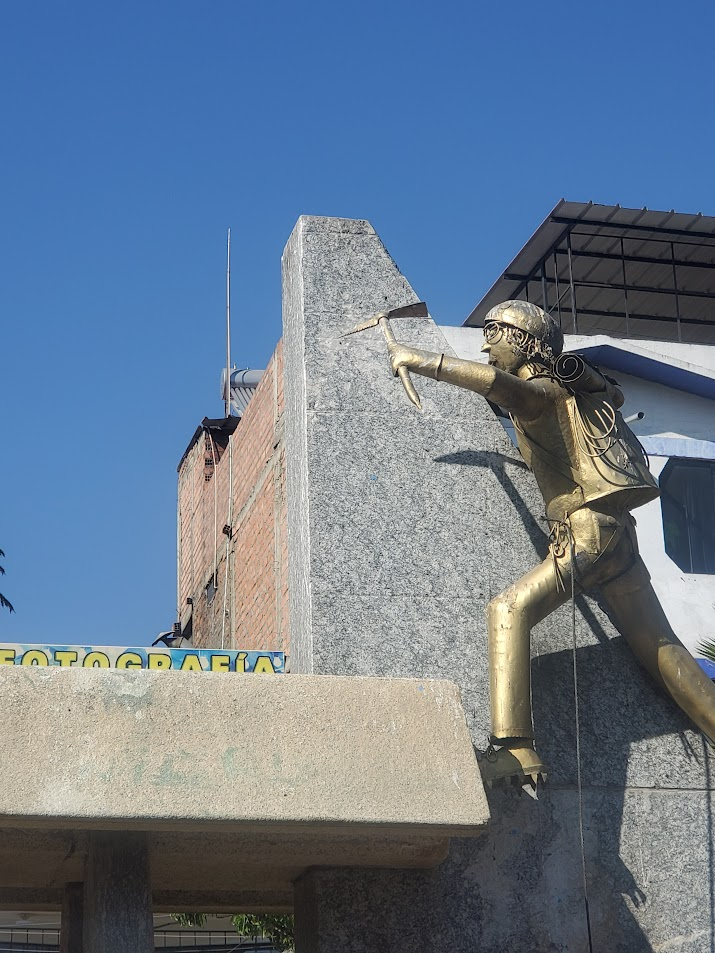
There is also another major church with a smaller square in front of it. It's called the Iglesia Del Señor De La Soledad. It is a beautiful church and is located a couple blocks from the only street on Huaraz to survive the earthquake. This street, Jirón José Olaya, still boasts cobblestone streets, some small local restaurants, and on some days, pop-up food stalls. It's worth getting a meal at and walking down the short section of street if you're in the area.

Shopping in Huaraz is arranged by area of the city. If you are looking for hardware stores, there's a street for that. Shoes? There's a street for that too. Hats? You guessed it. Pokémon cards for your kids? There's only one shop in town for that and you have to ask the kids because the adults will send you on a 3-hour walking your of the city only to end up a block from where you started (they were only like $20 for 50 packs though). There's an artisanal market that sells touristy items like blankets and hats made from alpaca wool, and knock-off ballcaps. There's also a central market that has lots of hanging chickens, cured meats, fresh cheeses, restaurants for the bold, and produce. Trujillo Markets can be found around the city and are small grocery stores where you can get snacks, cookies, rice and quinoa, sandwich stuff, candy, and general dry goods. It was also the most reliable place we found to break the 100 Sole bills the ATM's gave us. There are mini marts on just about every block as well where you can find bottled water, sodas, fruit, candy, and bread rolls. If you can find it early in the morning, the sourdough rolls were great. On Saturdays, they bake extra bread to cover Sunday, so the bread is usually stale on Sunday.
Huaraz felt safe for our group to walk around and we often walked alone or in couples and felt fine. The main city is super walkable but there are also taxi's you can hail and go anywhere for pretty cheap. Coffee can be found generally easily and there are a few cafes that serve espresso drinks on par with local coffee shops in the US (see recommendations), though if you require Starbucks, you might as well stay in Cusco or Lima (where they are all over the place). Mate de Coca (tea made by steeping coca leaves) is a popular drink in the area. Fruit juices are also available at seemingly every restaurant, including guava, orange, and passionfruit (I recommend the latter). Chicha Morada is another local drink you have to try while in Peru; it's made from purple corn and spices, served cold. Inka Cola is a Peruvian favorite soda that can be found everywhere, though I was not a fan. Cusqueña is the most common beer found in Peru and tastes similar to other Latin American lagers. Sierra Andina is the local microbrew found often in restaurants around town. I'd suggest the Alpamayo (amber) or the Huaracina (pale ale) and avoid the IPA's (they lack body, just stick with the pale ale). Ultímo Inka is apparently another local brewery, though we couldn't find their actual beer and the Google address and links seem to be manufactured.
Alright, I could go on, but I'm boring myself so chances are, you've become disinterested as well. Overall, Huaraz is a city worth visiting on its own in my opinion, as it has it's own charm, beautiful views, and a lively population.
Here are my recommendations for a visit to Huaraz*:
Café's
Café Andino: If you are looking for the comforts of home (which sometimes you are, when you're recovering), or just require good coffee (although Olaza's had great coffee every morning), check this place out. The coffee is delicious and I can honestly say that we have some worse cafe's in Reno (though Lighthouse and Coffeebar are better). The place is full of plants, has a climbing and local history library, and a huge sitting area upstairs with skylights that felt almost European. 10/10 don't miss this place!


Mama Mia: Café and bakery next to Casa de Guias that actually raises money for the Casa de Guias. It's great and has awesome deserts and a Parisian-style patio in a huge courtyard. 8/10
Café California: We didn't actually go here but everyone suggested it and Café Andino. If it's anything like Café Andino and it's closer to where you're at, go there. Otherwise, Café Andino was awesome by itself.
Hotels
Olaza's Guest House: This is the only place we stayed in Huaraz, so I can't speak t anywhere else. Tito, the owner, is awesome and is the son of a famous local artist who helped bring local flair back to the city after the earthquake. His brother runs a mountain biking shop in the same building, which was pretty fun. The rooms are clean, there's a huge lounge upstairs with a large rooftop terrace that makes it easy to sort and clean/dry gear. I'd stay here again for sure! 8/10
Refugios: Everyone on forums and in Huaraz seem to say the refugios are "for the Europeans". The one on Pisco (which is partners with the one in the Ishinca valley and a couple others) had a decent restaurant, clean hostel-style bunk rooms, hot water for showers, flushing toilets, a bar with cold beer and pisco sours (among a few other drinks), and helpful staff. I'd stay in one next time over lugging a tent and having restless nights. The prices were reasonable (barely more than the equivalent in town), especially when you take into account that everything has to be hauled up by mule. 7/10
Restaurants
Mordiscos (seafood): One of the guides from Shacsha told us this was the best seafood in town. If you're looking for seafood and/or ceviche, this place is great. 8/10
Tamya (Pizza, hamburgers): We went here three times because it was around the corner from Olaza's and was consistently good. The pizza was awesome and they have huge loaded burgers. They also have a good variety of drinks and made pretty good pisco sours. The portions were very large. We didn't have anything we didn't like here. 9/10
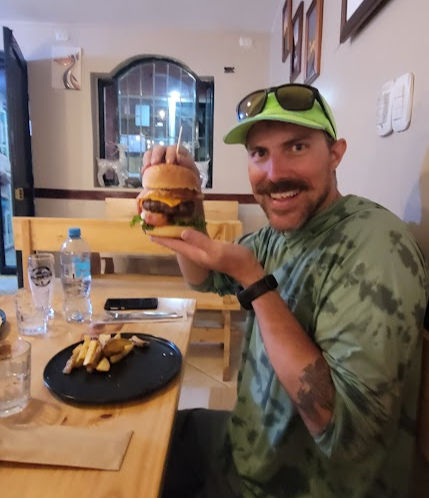
Granizo Heladeria Artesanal (fancy ice-cream): Really good ice cream. We came here the last two days we were in Huaraz and I wish we had gone earlier. The also have espresso here so you can have affogato (though they don't know what that means if you order it like that, so order your ice cream and then espresso and make it yourself). 10/10
Norabuena Pollos y Parrillas (roasted chicken and grilled items): This place was good and had lots of seating. Great for groups, though the service was lackluster. Also, Peruvians must hate salt, because all their food needs it. It's not like exceptionally good, but seems consistent. Bring your own salt here and get decent food. 6/10
Shimei/Nikkei (Japanese): This was the best meal we had in Huaraz. The sushi was great and made from local ingredients and the chef was a hipster dude who walked us through all the ingredients. The ramen is what this place is known for and is the best ramen I've had. I would have loved to go here more than once, but we found it at the end of our stay. 10/10


Taita (ceviche): Everyone seems to have their own favorite local ceviche/chocho but this place was always packed with locals and has a ton of flair. The walls are covered with black and white pictures of local people and historical events. The music is loud and it's a little overwhelming, but hang in there because the food is worth it. It's just good cheap ceviche. They get so packed that they run out of food (hence the mixed reviews on Google). Get there before 1pm and order the chicharron mixto, the chocho, and the big ceviche. 9/10

Charlie's (Pizza/Pasta): This place is a Gringo hot spot. Like, all the Europeans and Americans eat here. The pizza is good and has toppings I would order in the States (like prosciutto, fig, and goat cheese). Like many places in Huaraz, there are more beers on their menu than they actually carry, but they had a couple different local microbrews which were good. 9/10
Trivio Resto Bar (Sierra Andina Brewery, Café, and Restaurant): This place was super good and one of the more consistent places we ate at. In fact, when I wasn't feeling particularly good or brave and didn't want to eat at the market, Matt and I came here and were not disappointed. Again, it's geared more toward Gringos or at least not locals, but the food, drinks, and coffee were all good. 10/10
Creperie Patrick (steakhouse): This place is a fancy restaurant in Huaraz and is the place that will come up if you are Googling "alpaca steaks Huaraz". The steaks were tough, but the food was still good and the bar was cool. It's a place I wish we would have revisited. 8/10
El Tio Enrique (beer garden? sort of...): This place was awesome for many reasons. It is set up like a beer garden with large tables and a bartender wearing German Oktoberfest-style attire, however it's indoors and not a very large place. There are a lot of German beers on the menu but fewer on hand (again, this is typical in Huaraz). They serve fondue (which we had) and sausages (which we didn't). It's another place I would have enjoyed going to again. I assume it was opened by someone from Europe and run by a Peruvian manager who doesn't know what a beer garden is like. I won't them for not having all the beers on their menu, because they did have the largest variety on hand that we saw anywhere in Huaraz. 9/10
Things to do
Climb at Los Olivos: If climbing is your thing, it's worth at least a day to go to Hatun Machay. If you can't swing it due to the cost of getting there, the time commitment (it's a couple hours away), or the altitude (climbing at 13,000 feet is no joke), then stay in Huaraz and climb at the small but fun crag called Los Olivos. Look it up on Mountain Project for the location. Though it doesn't look very solid, the rock is super solid and the routes are varied. Be advised that it costs a few bucks per person.

Visit the Wilcahuain Ruins: These pre-Inkan ruins are worth a couple hours and are worthwhile to check out, especially in conjunction with the museum in town (see below). There are two locations and the entry fee (a few bucks) covers both locations. The two locations are about a 10 minute walk away, so get a taxi from town or take a collectivo (small van used like a city bus) and walk between the two. The lower site has a temple that has multiple stories that you can walk through. The upper site has more structures but they are smaller. Both sites allow you to walk through the structures. The entire thing only takes a couple hours at a leisurely pace.


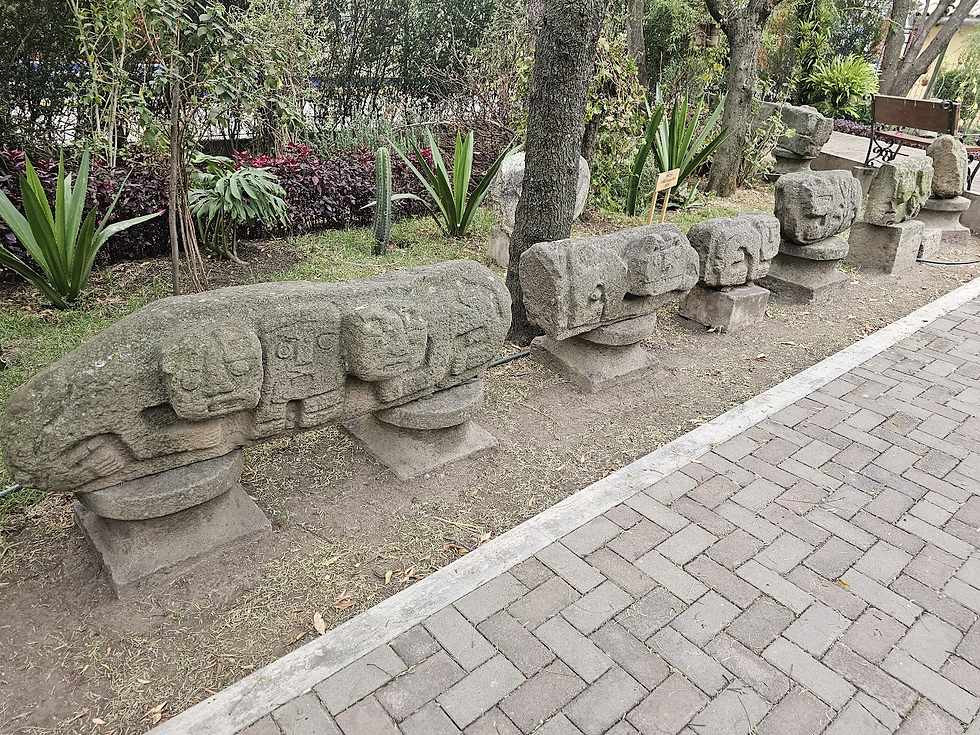
Visit the Archeological Museum of Ancash: Across the street from the Plaza de Armas (main square) is the museum. Like the ruins (above), it's small but interesting enough to be worthwhile. This particular museum should take you less than half an hour to see all of the inside artifacts (including a mummy and a collection of skulls), but it is outside that this museum really shines! The garden is the most beautiful outdoor space we saw in Huaraz, and it holds a large selection of carved stones. We were told these stones were famous for their depictions of nude males and is often noted to have a large assortment of "penis statues". Unfortunately for anyone looking for that sort of thing, it's just not the case. The stones look like stones carved to look sort of like men and their "details" are not defined in anyway. The garden is totally worth it though, and my suggestion is to go to the Wilcahuain ruins before coming here.

Go on a Mountain Bike Ride: Admittedly, I did break a rib, hurt my finger, and get bruised up from wrecking a few times while riding. Do this at your own peril, but if mountain bike riding is you jam, Huraz is a cool place to ride. Find Julio Olaza's mountain bike company attached to his brother's hotel (search for Olaza's in the Iglesia Del Señor De La Soledad area, or find his information at Cafe Andino.

*These are my recommendations and I admit that I am a soft grader. I am fairly easy to please with food and if the food is reasonable and consistent and the service is generally attentive, it gets a good grade. These are my grades and don't reflect our votes as a whole (some of the guys didn't like some of the places on his list as much as I did).


Comments